Ed Policy and Music Teacher Preparation

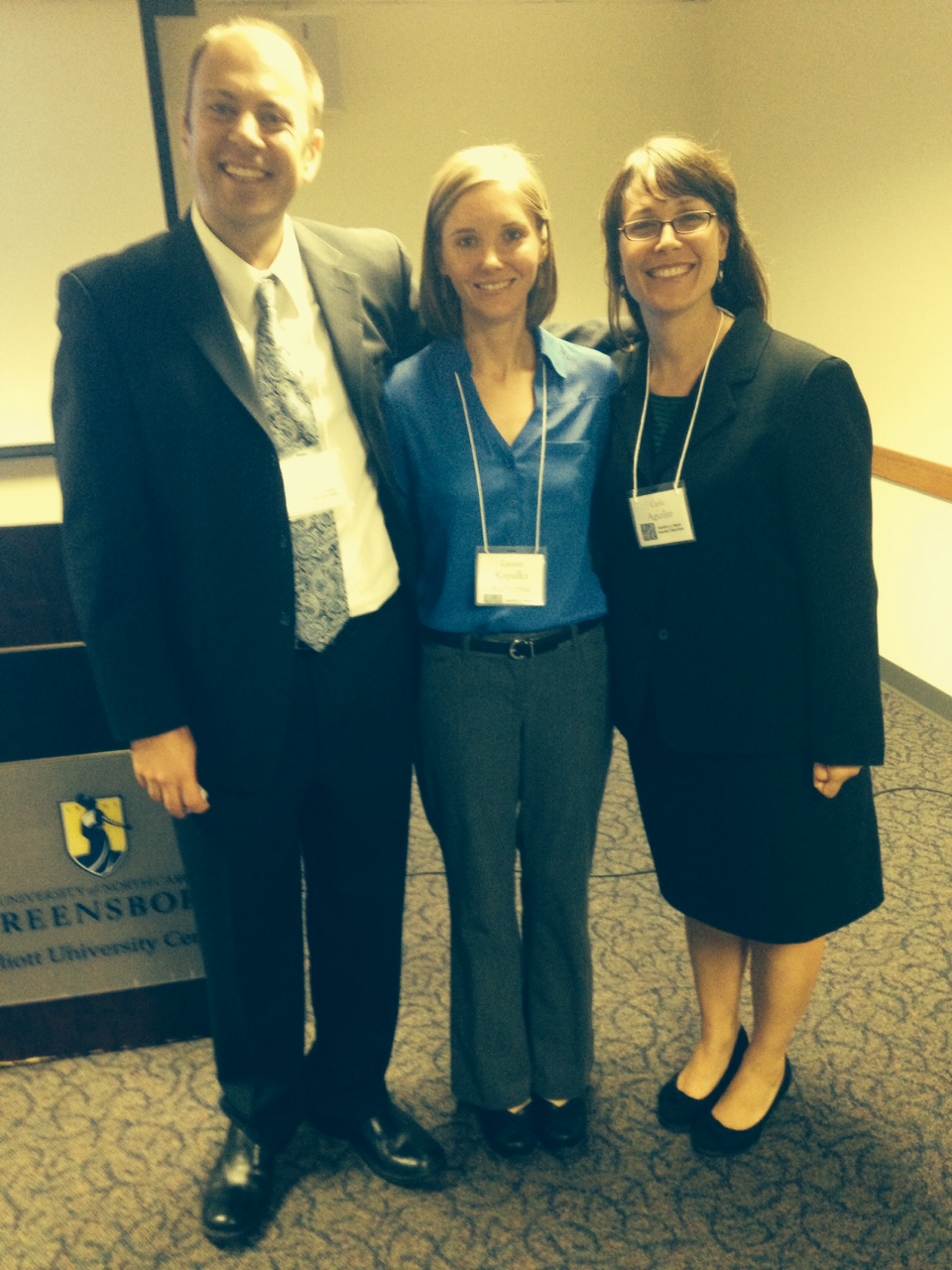
This weekend I had the opportunity of co-presenting a session on embedding educational policy issues in music teacher preparation coursework at the bi-annual Symposium on Music Teacher Education in North Carolina. It was a pleasure to work with our newest Jacobs School of Music music education colleague, Dr. Lauren Kapalka-Richerme and IU JSOM alumna, Dr. Carla Aguilar who is currently coordinator of music education at Metropolitan State University in Denver, Colorado.

This is us enjoying the day! And here is a link to our presentation slides: Aguilar, Miksza, Richerme – Policy – SMTE – 2013.

Also, check out the SMTE Policy ASPA Facebook page here: SMTE POLICY

photo

Continue reading “Ed Policy and Music Teacher Preparation”

Inspiration: Disarming music

“I believe that the purpose of art is to come up with ways to transform the most negative instincts into creative instincts.”

This is one of the most simple, powerful, and inspiring short videos I’ve seen in a while.

Enjoy.

Theoretipracticaliexpealidocious

Preface

This post includes a few brief, light-hearted thoughts I put out to the music education graduate research colloquium today during our faculty roundtable on the theme of, “Intersections Between Research and Practice.” This event was intended to be an introductory colloquium during which the faculty shared 5- to 7-minute reflections on how they see their own research impacting their practical concerns. If you’re curious, this was my take…

Continue reading “Theoretipracticaliexpealidocious”

Need summer reading ideas for nerds? Look no further!

Are you a nerd looking for a good read? This is a quick post about the reading I’ve been lucky enough to squeeze in this summer, maybe your nerdy side will enjoy some of it too.

It’s been a great summer of family time at home, trips to see friends and family afar, outdoor activity, research, writing, teaching – and – having a little bit of extra time each week to read purely for the sake of pleasure!

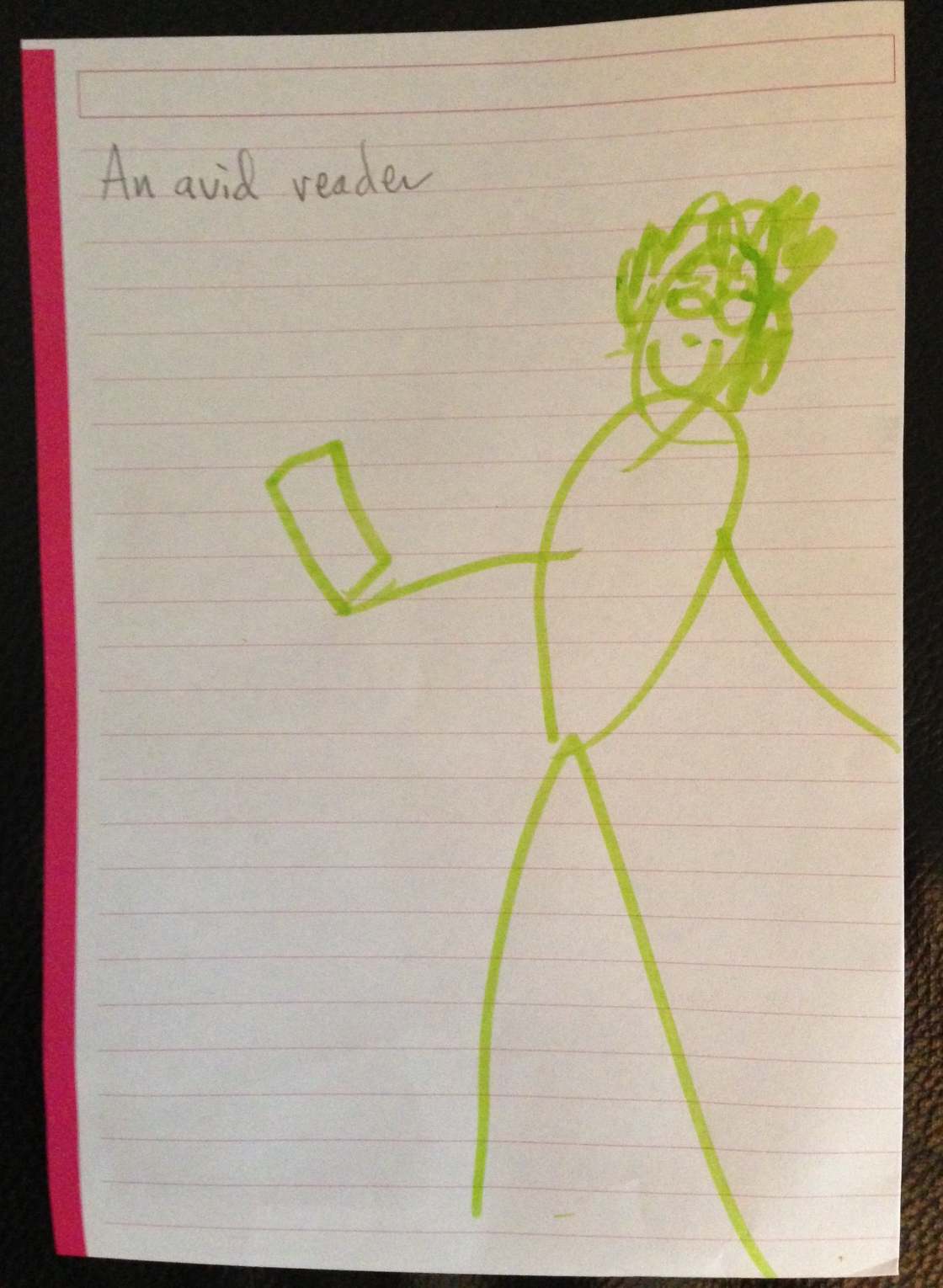
Here’s a quick list of some of the books I had a chance to read for fun since the spring semester wound down along with a silly synopsis of my take on each of them.*

AvidReader

Continue reading “Need summer reading ideas for nerds? Look no further!”

Near, Far, and In-between – Some views on instrumental music teaching effectiveness*

The summer course I’m teaching, Advanced Instrumental Methods, has kicked off this month and I thought I’d share a bit about the first topic we tackled. We began with an exploration of what it means to lead as an instrumental music educator and what factors seem to contribute to teaching effectiveness in instrumental music settings. As the title of this post implies, we tried to consider several perspectives – near, far, and in-between – to paint a picture of great instrumental music teaching.

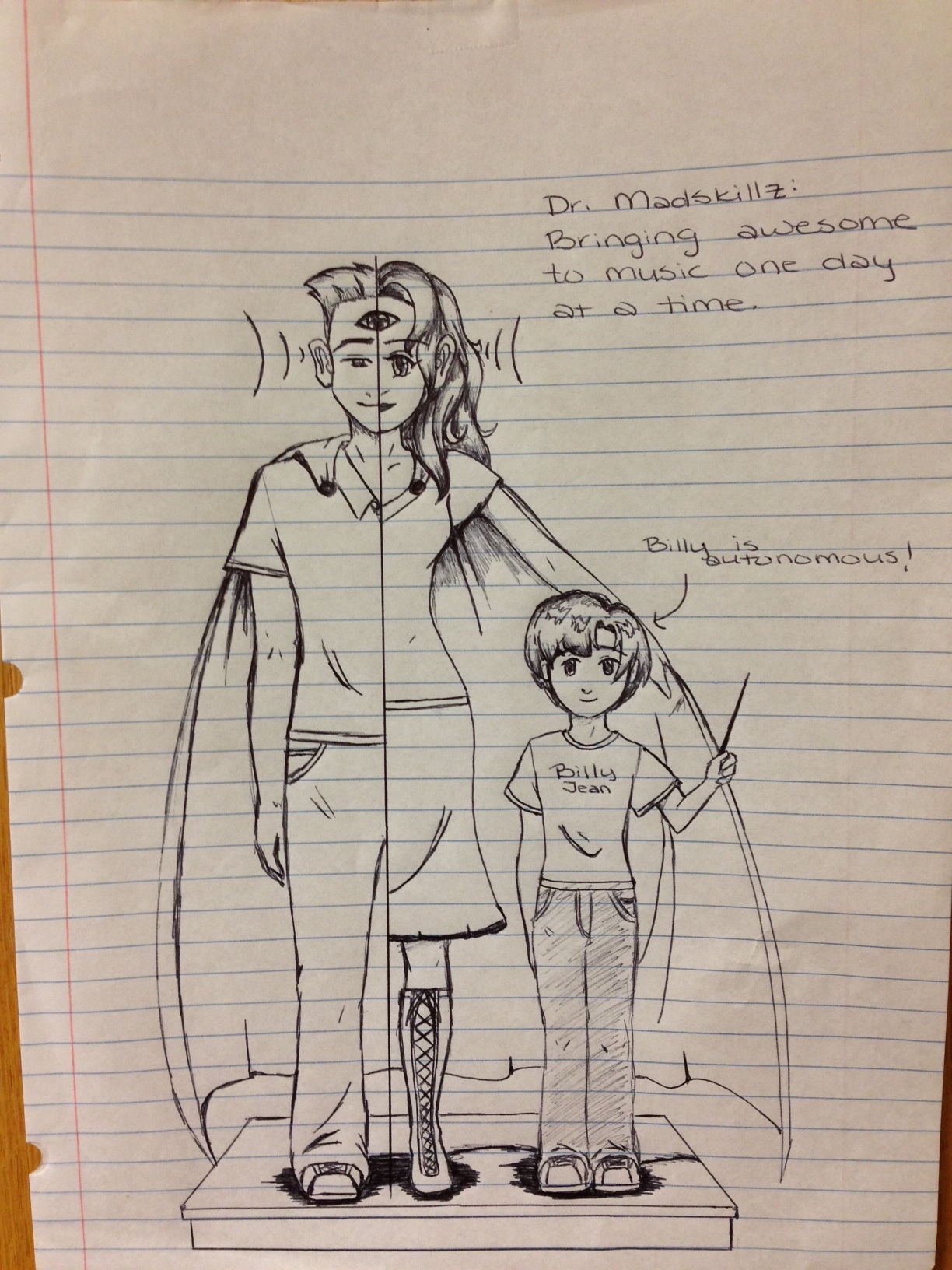
One of the more entertaining discussion activities we tried in class was to draw a comic book superhero depicting what an ideal conductor might look like and trying to exemplify what kinds of superpowers a super-instrumental music teacher might have – here’s one image from some particularly gifted artists in class… see if you can guess the attributes they were trying to emphasize… Notice some of the more unique elements… the “third eye,” “lack of gender-specificity,” “inclusion of a student (with their own baton),” etc.

Dr. Madskillz

Here’s a quick glimpse of some of the perspectives we’ve brought to the issue as we zoom in and out in our discussions…

Continue reading “Near, Far, and In-between – Some views on instrumental music teaching effectiveness*”

How do music teachers develop? Some frameworks to consider

One of the most rewarding and exciting aspects of being involved in music education in higher education is witnessing how preservice teachers can change and develop throughout the course of their undergraduate preparation. In addition to being rewarding, this is one of the many, many aspects of undergraduate teaching that’s extremely compelling.

My colleague, Dr. Margaret Berg from the University of Colorado at Boulder, and I had a co-authored paper recently appear in the Journal of Music Teacher Education that outlines several perspectives when considering ways that music teachers might develop. The specific purpose of our article was to “(a) discuss the value of a research framework and several ways one can conceptualize a framework, (b) briefly present several prominent frameworks for studying teacher development that have been generated in the context of general education, and (c) describe some unique aspects of music teaching and music teaching contexts that could inform theoretical frameworks of preservice music teacher development.”

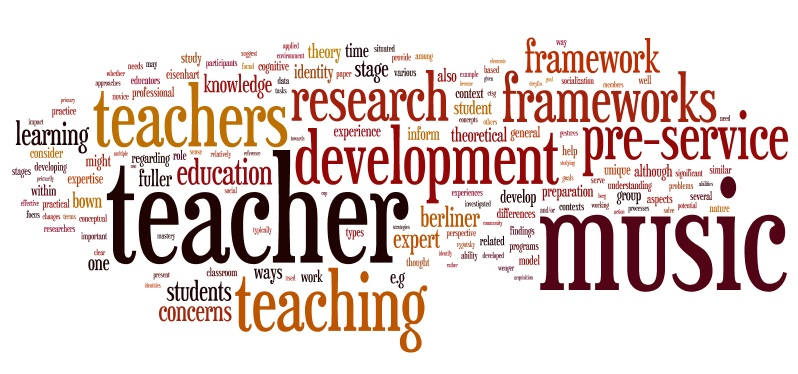
Here is a word cloud of the article’s contents:

JMTE Wordle
Continue reading “How do music teachers develop? Some frameworks to consider”

Obi-Wan your teaching, Episode XXXVII

PRELUDE

What does it mean… to Obi-Wan your teaching?

Definition: To seek wisdom about teaching, to keep a cool head when negotiating good and bad ideas, to have a sense of humor about teaching, to be present when you’re needed (e.g., you may be their only hope), to commit to nurturing the next generation of whatever

Why is this episode thirty seven?

To leave room for prequels (since that’s the way it’s done – obviously)

Episode XXXVII: Listen

Listen to your students like Obi-Wan listens to R2-D2…

    • Be patient and listen very carefully to what your students have to say
    • Even if it’s hard for others to understand, you might be the only one around who can translate what it is they’re trying to say
    • Even when they’re precocious your students can be helpful in ways you can’t imagine
    • Recognize that they’re an integral part of the “team” and “process” when it comes to your teaching

For your listening pleasure…

A link to nothing but R2-D2s sounds

The Future of Music Education: Continuing the Dialogue about Curricular Reform

I’m excited to report the publication of a recent article I wrote for the Music Educators Journal titled: “The future of music education: Continuing the dialogue about curricular reform”

The heart of this article is captured in the opening quote: “The art of progress is to preserve order amid change and to preserve change amid order.” Alfred North Whitehead

In this article I highlight several trends regarding critical arguments that have recently been raised when discussing the secondary large-ensemble tradition in the public schools. In support of secondary school ensembles, I argue for a discussion of curricular reform that avoids polemical rhetoric, straw men, and hasty generalization. I also suggest taking special care when considering the incorporation of new technologies and popular music idioms in music education curricula.

I describe how critical energies might be redirected to what I see as urgent needs for the profession such as:

  • Directing advocacy efforts towards increasing access to music education for underserved populations of children
  • Focusing advocacy efforts towards enhancing support for foundational elementary music experiences
  • Transforming teaching to maximize what’s possible from within the large-ensemble model without needlessly tearing it down by:
    • Increasing the breadth of comprehensive musicianship experiences possible
    • Increasing the degree of individual student empowerment
    • Broadening the range of collaborative approaches to music-making that teach­ers and students could engage in
    • Broadening the inclusiveness of repertoire in large-ensemble curricula

After briefly, yet sincerely, acknowledging the certain need to expand curricular offerings for music in the secondary schools, I close with the following:

“…it will be necessary to cultivate dispositions of patience and reflection with visions of curricular transformation if we hope for significant and lasting changes in the nature and quality of music education for all.”

Please check out the full article here (free to all NAfME members – or email me if you’d like to read it):

Miksza, P. (2013). The future of music education: Continuing the dialogue. Music Educators Journal, 99, 45-50.

“Believe Me, There’s Nothing Boring About Statistics”

This is a terrific BBC documentary on stats – for those of you that enjoy the insights that statistical analyses can yield, check it out. I realize this has probably made the internet rounds a few times over, but it’s too good not to share…

Watch the video “The Joy of Stats” at the Gapminder website.

Also – the Gapminder website is generally amazing. Playing with the map is great fun.

It’s fun to imagine the ways such approaches to data analysis and visualization could enhance what we know about music education in the world.


Sound City and McCartney’s Ease: A quest to be more like Paul this summer

The context:

I recently had a chance to see the movie, Sound City at the IU Cinema. Here’s an NPR story about it (Read it). It’s a fun documentary that chronicles the life of a recording studio by the same name in LA (Sound City Studios). It’s a neat story of a studio that seemed to have played a major role in the careers of some well-known pop/rock acts – the bits about Fleetwood Mac, Neil Young, Tom Petty, Johnny Cash, and Nirvana were particularly fun for me. The movie also covers the stories of the people ‘behind the scenes’ who operated the business and technical elements of the studio – which in lots of ways were more interesting than the musicians’ stories.

The centerpiece of the documentary is a Neve 8028 Console, a vintage piece of analog recording equipment that was integral to the studio’s success. There’s a hilarious scene where the designer of the board, Rupert Neve, is sitting with Dave Grohl explaining the electronics that allows for the console to capture such a great sound. The scene is hilarious because Dave Grohl is grinning like a clown and is in full admission that he has no idea what he’s talking about.

Continue reading “Sound City and McCartney’s Ease: A quest to be more like Paul this summer”