Strategies and considerations for assessment in music education

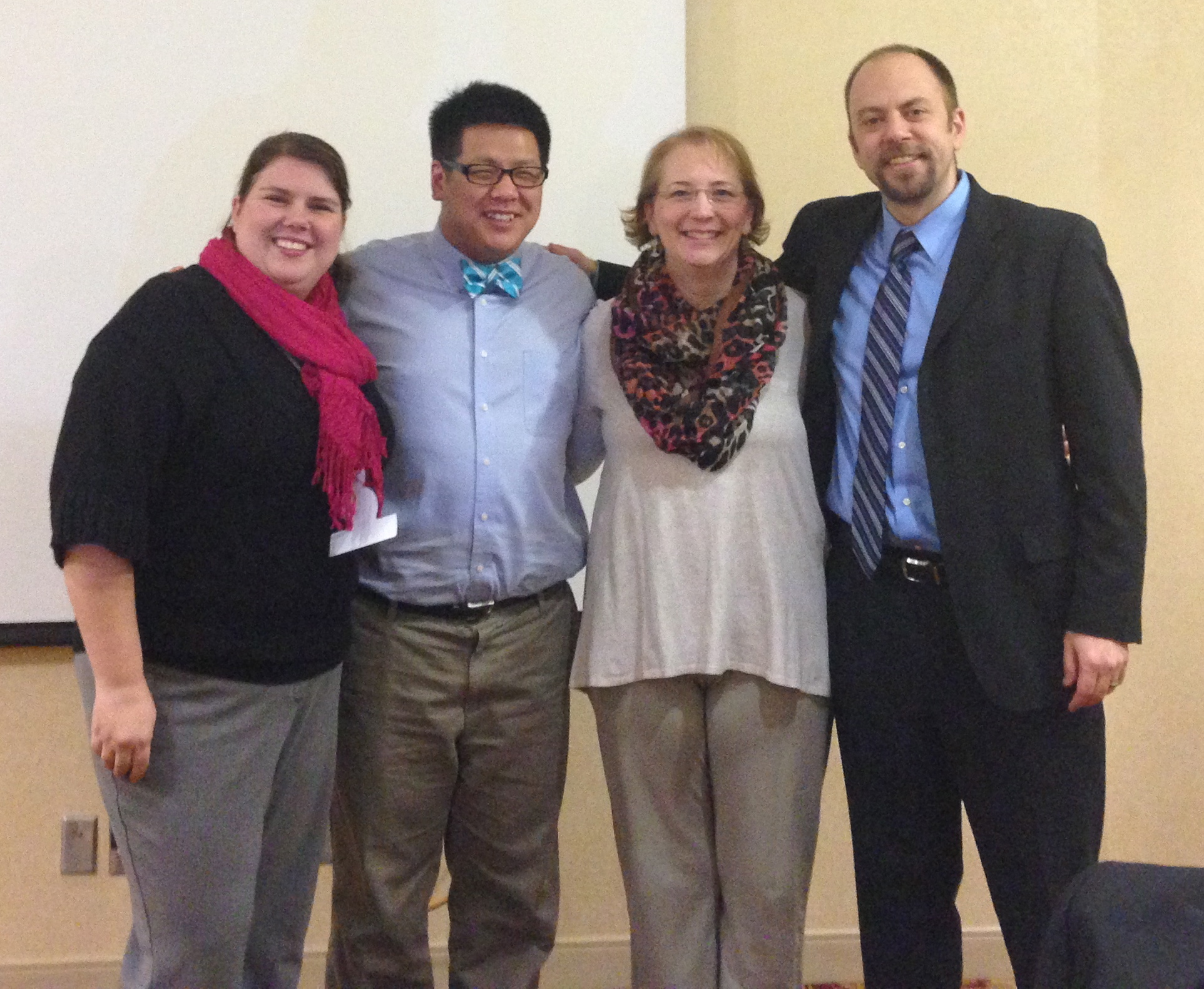
I am fortunate to have had the distinct pleasure of moderating a panel on assessment practices in music education this morning at the Indiana Music Educators Professional Development Conference.

The panel consisted of three terrifically dedicated and incredibly intelligent teachers:

  • Lisa Sullivan, Mohawk Trails Elementary School
  • Laura E Helms, Bloomfield JR/SR High School (choral emphasis)
  • Soo Han, Carmel HS (instrumental emphasis)

They each shared their insights regarding the value and purpose of assessment in music and how to approach designing an assessment system that was also practical and pragmatic in its execution.

Resources from the panel presenters can be found at the links below (posted with permission). Thanks to all who were in attendance at today’s session and thanks again to the terrific presenters!

Powerpoint Slides

Handout

Pete, Lisa, Laura, Soo - IMEA 2014

Experimenting with efficient practice: Plan-Perform-Reflect

I’m happy to be reporting on a recent study that I’ve had published in the journal, Psychology of Music:

The Effect of Self-Regulation Instruction on the Performance Achievement, Musical Self-efficacy, and Practicing of Advanced Wind Players

In essence, the study was designed to assess the relative benefits of (1) instruction for practicing that included explanations and demonstrations of self-regulated approaches to learning such as planning, goal-setting, self-evaluation, strategy use, and reflection as compared to (2) instruction that dealt with explanations and demonstrations of strategies use only. The study employed an experimental design with pre- and post-test measures of each outcome and randomized assignment of individuals to treatment and control groups. The participants for the study were undergraduate brass and woodwind players. They were asked to watch contrasting video demonstrations of practice approaches across 5 days. Ultimately, the results indicate a promising, positive effect of the self-regulation training.

If you’re interested in learning more about the work and seeing the video used for the experimental instruction… …check out this Prezi with narration in the pic below:

Practice Prezi Shot copy

Inspiration: Disarming music

“I believe that the purpose of art is to come up with ways to transform the most negative instincts into creative instincts.”

This is one of the most simple, powerful, and inspiring short videos I’ve seen in a while.

Enjoy.

Need summer reading ideas for nerds? Look no further!

Are you a nerd looking for a good read? This is a quick post about the reading I’ve been lucky enough to squeeze in this summer, maybe your nerdy side will enjoy some of it too.

It’s been a great summer of family time at home, trips to see friends and family afar, outdoor activity, research, writing, teaching – and – having a little bit of extra time each week to read purely for the sake of pleasure!

Here’s a quick list of some of the books I had a chance to read for fun since the spring semester wound down along with a silly synopsis of my take on each of them.*

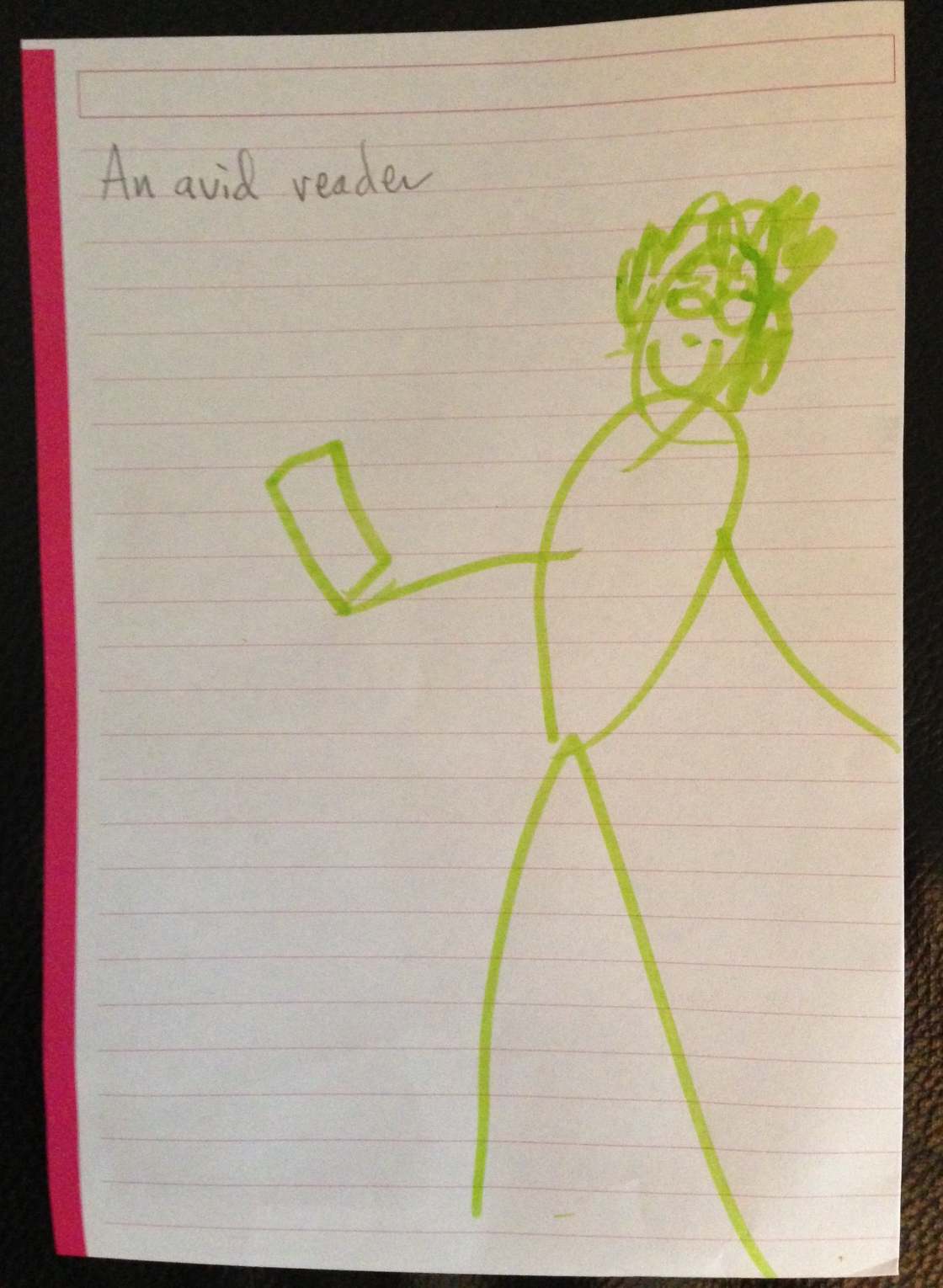
AvidReader

Continue reading “Need summer reading ideas for nerds? Look no further!”

Near, Far, and In-between – Some views on instrumental music teaching effectiveness*

The summer course I’m teaching, Advanced Instrumental Methods, has kicked off this month and I thought I’d share a bit about the first topic we tackled. We began with an exploration of what it means to lead as an instrumental music educator and what factors seem to contribute to teaching effectiveness in instrumental music settings. As the title of this post implies, we tried to consider several perspectives – near, far, and in-between – to paint a picture of great instrumental music teaching.

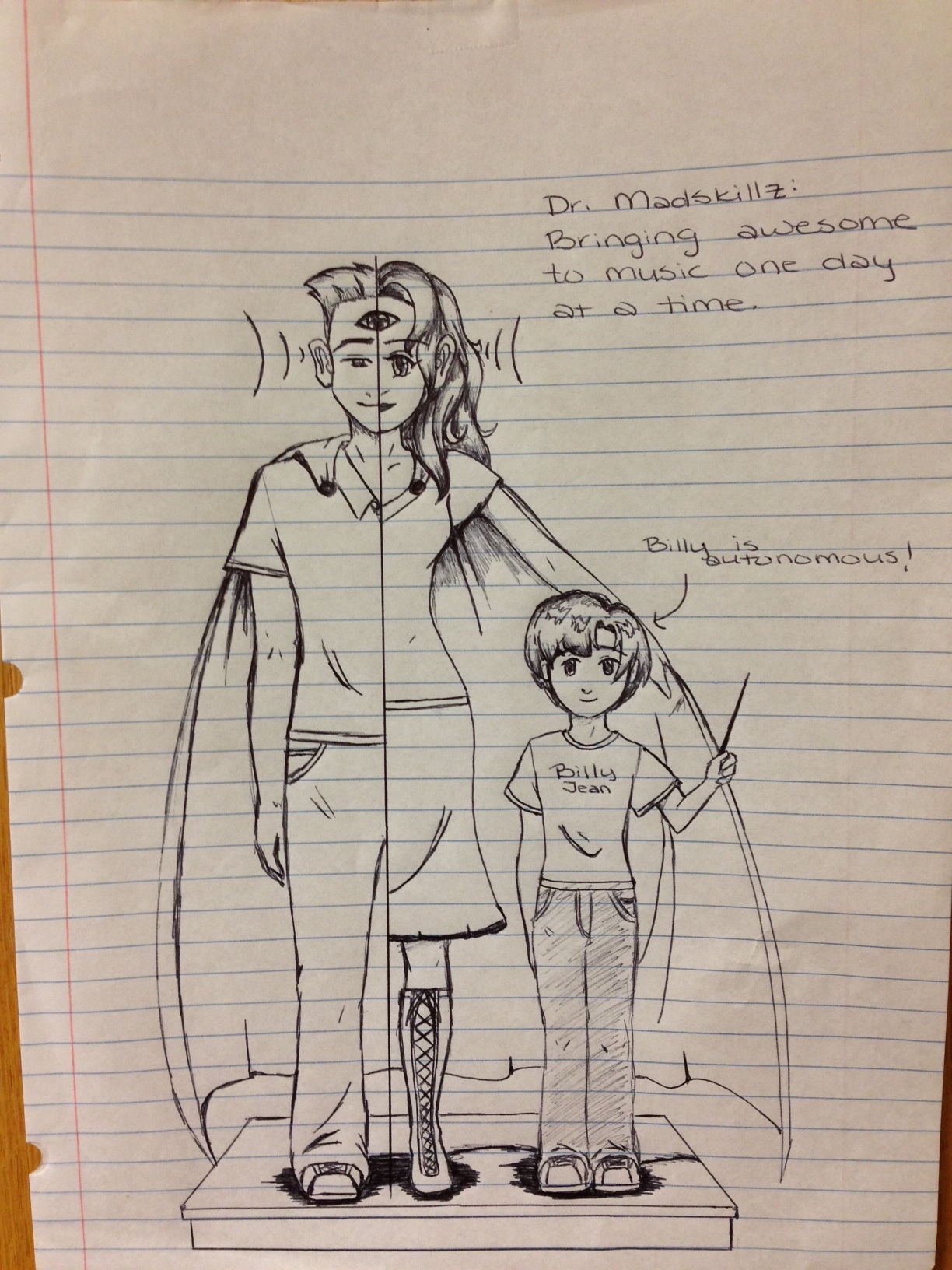
One of the more entertaining discussion activities we tried in class was to draw a comic book superhero depicting what an ideal conductor might look like and trying to exemplify what kinds of superpowers a super-instrumental music teacher might have – here’s one image from some particularly gifted artists in class… see if you can guess the attributes they were trying to emphasize… Notice some of the more unique elements… the “third eye,” “lack of gender-specificity,” “inclusion of a student (with their own baton),” etc.

Dr. Madskillz

Here’s a quick glimpse of some of the perspectives we’ve brought to the issue as we zoom in and out in our discussions…

Continue reading “Near, Far, and In-between – Some views on instrumental music teaching effectiveness*”

The Future of Music Education: Continuing the Dialogue about Curricular Reform

I’m excited to report the publication of a recent article I wrote for the Music Educators Journal titled: “The future of music education: Continuing the dialogue about curricular reform”

The heart of this article is captured in the opening quote: “The art of progress is to preserve order amid change and to preserve change amid order.” Alfred North Whitehead

In this article I highlight several trends regarding critical arguments that have recently been raised when discussing the secondary large-ensemble tradition in the public schools. In support of secondary school ensembles, I argue for a discussion of curricular reform that avoids polemical rhetoric, straw men, and hasty generalization. I also suggest taking special care when considering the incorporation of new technologies and popular music idioms in music education curricula.

I describe how critical energies might be redirected to what I see as urgent needs for the profession such as:

  • Directing advocacy efforts towards increasing access to music education for underserved populations of children
  • Focusing advocacy efforts towards enhancing support for foundational elementary music experiences
  • Transforming teaching to maximize what’s possible from within the large-ensemble model without needlessly tearing it down by:
    • Increasing the breadth of comprehensive musicianship experiences possible
    • Increasing the degree of individual student empowerment
    • Broadening the range of collaborative approaches to music-making that teach­ers and students could engage in
    • Broadening the inclusiveness of repertoire in large-ensemble curricula

After briefly, yet sincerely, acknowledging the certain need to expand curricular offerings for music in the secondary schools, I close with the following:

“…it will be necessary to cultivate dispositions of patience and reflection with visions of curricular transformation if we hope for significant and lasting changes in the nature and quality of music education for all.”

Please check out the full article here (free to all NAfME members – or email me if you’d like to read it):

Miksza, P. (2013). The future of music education: Continuing the dialogue. Music Educators Journal, 99, 45-50.

Sound City and McCartney’s Ease: A quest to be more like Paul this summer

The context:

I recently had a chance to see the movie, Sound City at the IU Cinema. Here’s an NPR story about it (Read it). It’s a fun documentary that chronicles the life of a recording studio by the same name in LA (Sound City Studios). It’s a neat story of a studio that seemed to have played a major role in the careers of some well-known pop/rock acts – the bits about Fleetwood Mac, Neil Young, Tom Petty, Johnny Cash, and Nirvana were particularly fun for me. The movie also covers the stories of the people ‘behind the scenes’ who operated the business and technical elements of the studio – which in lots of ways were more interesting than the musicians’ stories.

The centerpiece of the documentary is a Neve 8028 Console, a vintage piece of analog recording equipment that was integral to the studio’s success. There’s a hilarious scene where the designer of the board, Rupert Neve, is sitting with Dave Grohl explaining the electronics that allows for the console to capture such a great sound. The scene is hilarious because Dave Grohl is grinning like a clown and is in full admission that he has no idea what he’s talking about.

Continue reading “Sound City and McCartney’s Ease: A quest to be more like Paul this summer”

Beauty, Motion, and Home – Listening to Music

One of the most exhilarating yet, enigmatic things about teaching, learning and researching music is trying to comprehend the sheer variety of ways that musical experiences can be meaningful to people.

Over the past few months I’ve found myself coming back again and again to three “tunes” that have been part of my listening repertoire for years. I love each of these pieces of music and have found all three to be deep reservoirs of personally meaningful experience. Thinking about “how” and/or “why” each of these tunes might be meaningful is icing on the experiential cake.

Here are some of my experiences and ‘blips’ of potential explanations for how they might arise… …read on into the references if you’re curious for more…

Continue reading “Beauty, Motion, and Home – Listening to Music”

Arts Ed: Reasons to Advocate and Levers to Pull

Reasons to advocate: Inspiring stories

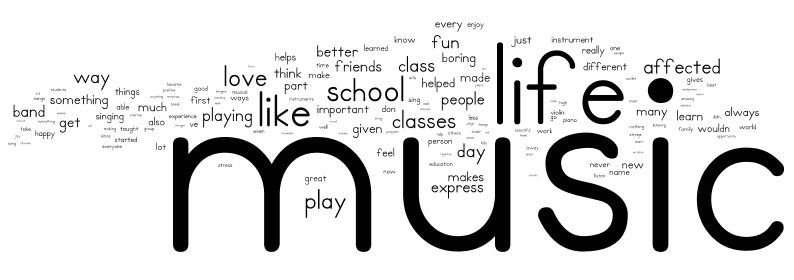
The collegiate chapter of the National Association for Music Education at IU (see their blog!) recently participated in the music advocacy groundswell event (found here) by collecting stories from children about why music matters to them. They made efforts to contact public school teachers in the greater Bloomington area and reached out to the teachers from their hometowns. They ended up collecting nearly 18,000 words worth of inspirational stories of how music has played an essential role in kids’ lives across the country.

The comments the children made are powerful to say the least… they speak of many benefits of music that we, as musicians and teachers, know to be true – finding a place to belong, uncovering a special talent, learning about themselves, developing a means of self-expression, bringing them closer together with friends and family, connecting to a greater community, music as a release and a joy, the acquisition of skills and dispositions that are benefits in other areas of life, etc.

Here is a word cloud from the collection of stories that emphasizes the sentiments the students most commonly expressed – click on it for a close-up:

Better wordle 2

Continue reading “Arts Ed: Reasons to Advocate and Levers to Pull”